Livestock
Introduction
Animal husbandry is one of the foundational principles of Chesed Ranch. We believe that healthy animals, sound management practices, and responsible stewardship go hand in hand.
Every animal on the ranch serves a purpose, contributes to the ecosystem, and plays a role in the ongoing story of the Ranch.
The American Aberdeen Program
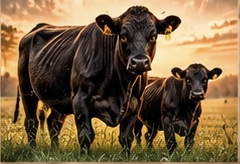
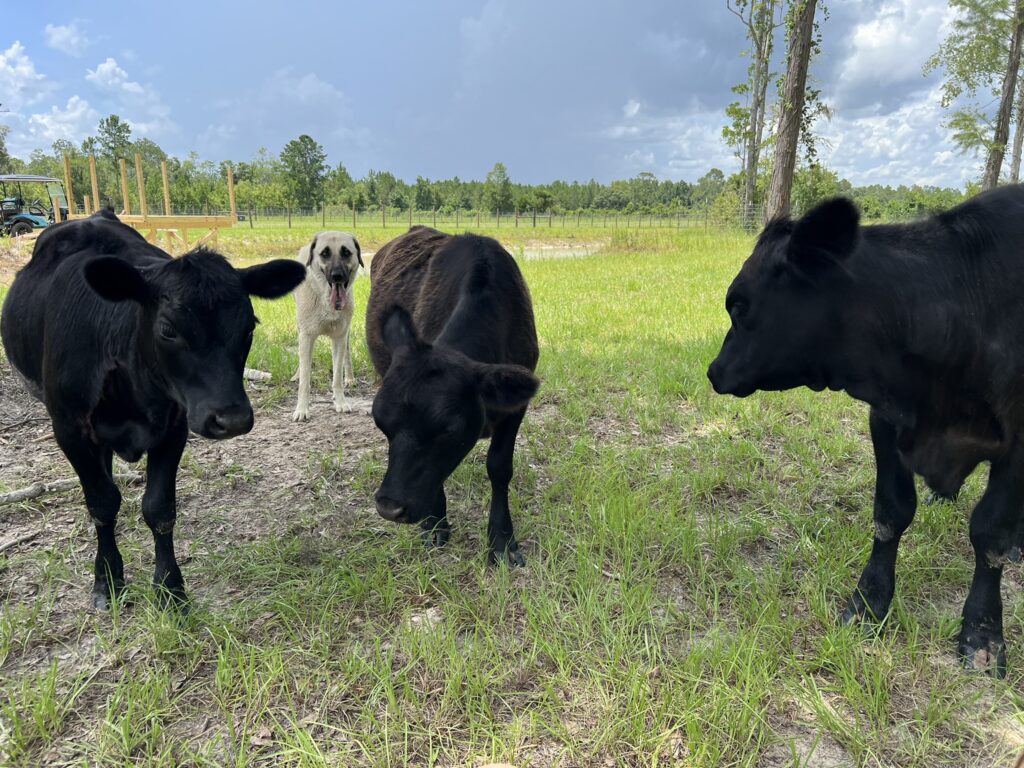
- Why American Aberdeen cattle and why we chose the breed?
- Simple, we have a limited amount of land and wanted a high quality beef that was easy to handle, capable of finishing on grass, easy on fences, vary hardy and disease resistant.
- Size: They are miniature or “lowline” cattle, averaging about 60% the size of a standard commercial Angus. Mature cows weigh ~ 800-1,100 lbs, and bulls weigh ~ 1,100-1,600 lbs.
- Origin: Developed from a closed, low-growth-rate Black Angus herd established in 1929 at the Trangie Research Center in Australia.
- Feed Efficiency: Because they are smaller, they require about 30% less feed than full-sized Angus, making them excellent for small acreages and rotational grazing.
- Meat Yield: They are highly efficient, yielding a higher percentage of beef per acre than standard breeds.
- Simple, we have a limited amount of land and wanted a high quality beef that was easy to handle, capable of finishing on grass, easy on fences, vary hardy and disease resistant.
- Our long-term breeding goals.
- We have the pasture space to run 6 cows and a bull. Our plan is to split calving in spring and fall by half during each and hold back one for finishing and sell the other two when weaned. Finding quality breeding stock wasn’t real easy and because of that our goal and direction shifted to Fullbloods. Staying true to a heritage breed as a level of significance to me personally.
- Why Fullblood genetics?
- The Fullblood designation is simply that the animal can be traced back to the Trangie Research Center and the original Angus purchased from Canada. Our choice in focusing on that is that there is a wide range of available sires that we can get and use in our future AI program for traits that we feel are needed in available livestock in the Southeast. There are some absolutely great ones down here but there are not enough to fulfill the demand.
- Future AI program?
- Our intent from the beginning was to use AI for our herd. Those plans have not changed but we also needed to get the operation going and the easiest path to that was a herd bull. As we calve the first few years we will take that information and then shift into AI where necessary. For us as a small operation it makes more sense to be able to vary off-spring traits for our herd. We are planning to have the AI operation fully online by late 2028/early 2029.

Learn About Our American Aberdeen Program
Foundation Herd
Herd Sire
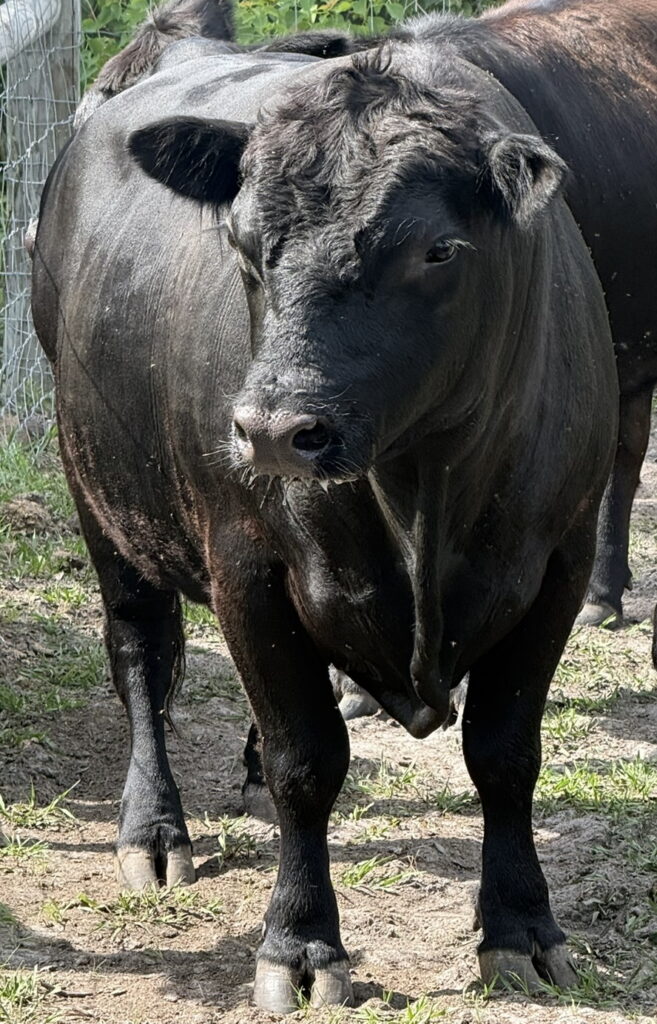
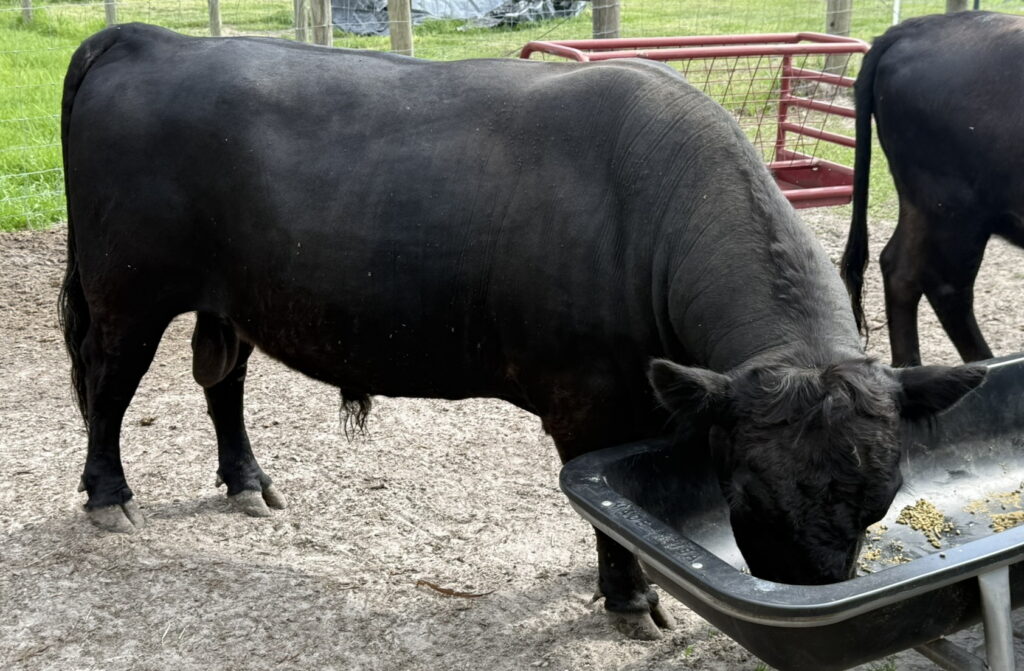
Green Acres Phoenix
Small breeder community at work, we are behind in the timeframe of what we wanted to have operational in the context of our AI operation. I was being picky and happen to hear from a friend that this guy was available and we wasted no time. He has already proven himself as a herd bull and also had what we were looking for in genetics and traits. Looking very forward to his first calves from our heifers in the spring of 2027.
Foundation Females
IRF Ginny
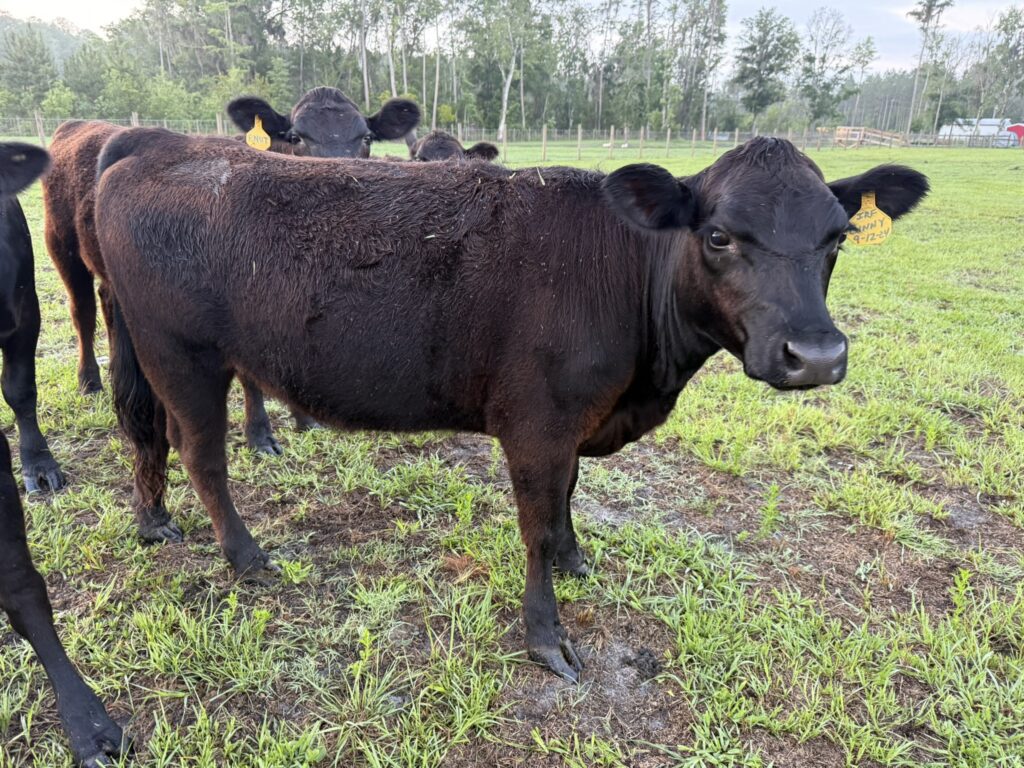
Ginny is a Fullblood American Aberdeen and came from Lakeland with her half sister Noelle, great disposition and frame characteristics for what we were after. Her first calves are expected late next spring (2027) and will be fullblood registered calves.
IRF Noelle
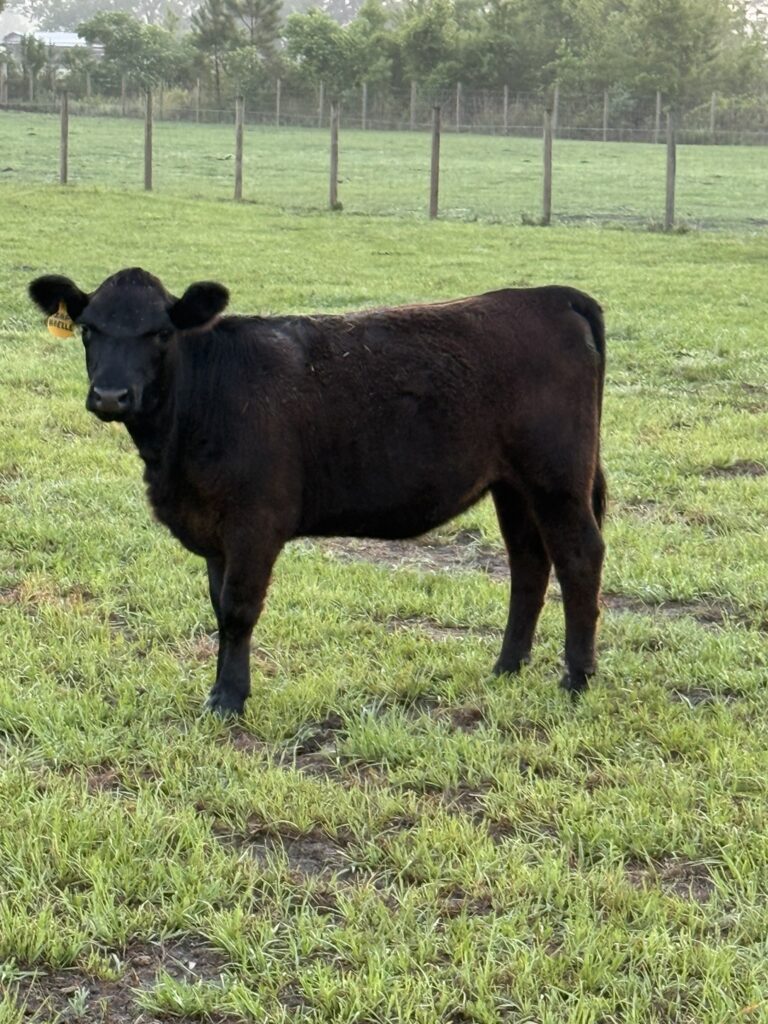
Noelle is a Fullblood American Aberdeen and has an amazing disposition very much looking forward to her calves in the fall of 2027 as registered fullblood calves.
Green Acres Debby
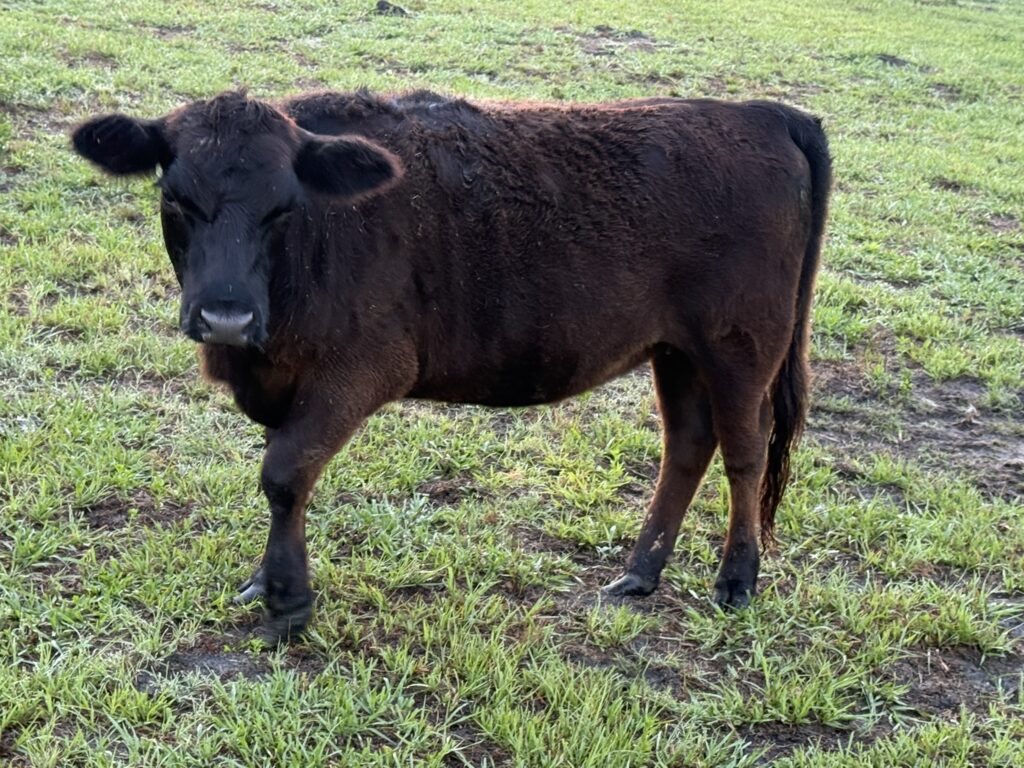
Debbie is a Fullblood American Aberdeen, she isn’t much for pictures, she was the first full blood we brought home and I feel is going to be a very solid momma, she is set to be bred later this fall for early fall 2027 and her calves will be registered fullbloods.
Caroline
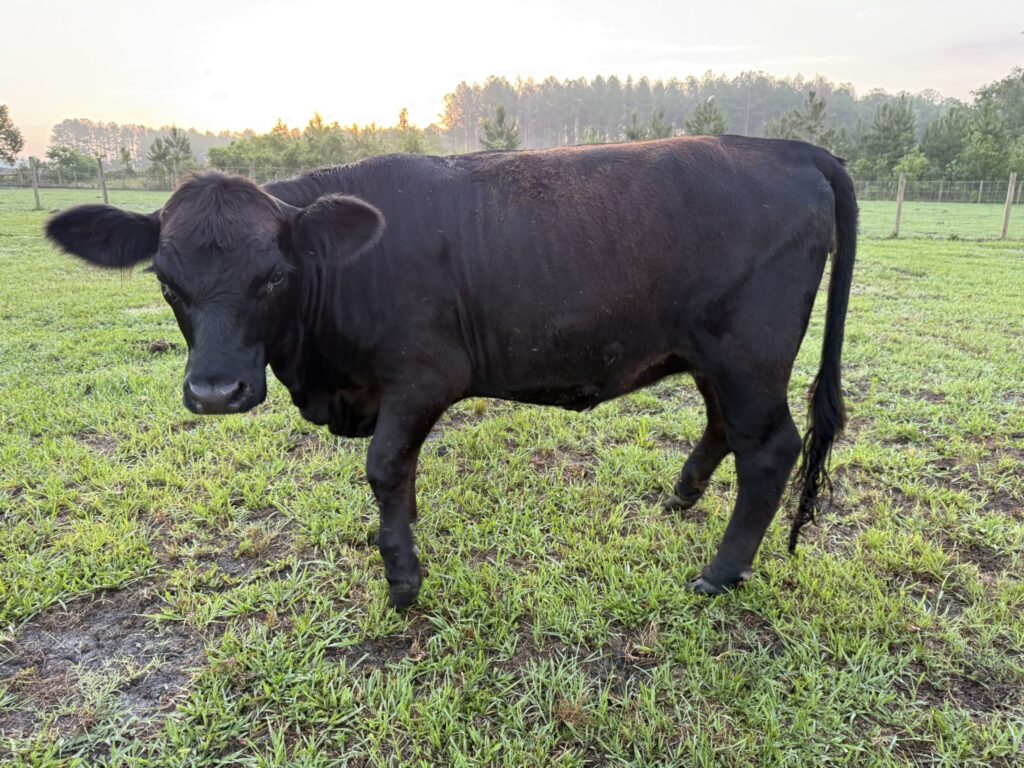
Caroline was the first heifer we bought (with her half sister Lola), she isn’t much for pictures because she just wants a treat every time you are in the pasture. She is a very calm heifer and deep and wide, a little bigger head than I would like but I’m hoping she’ll give us several years of great offspring. She is a crossbreed (I think she has some dexter in her) and not registered, so her calves will be 50% moderators.
Lola
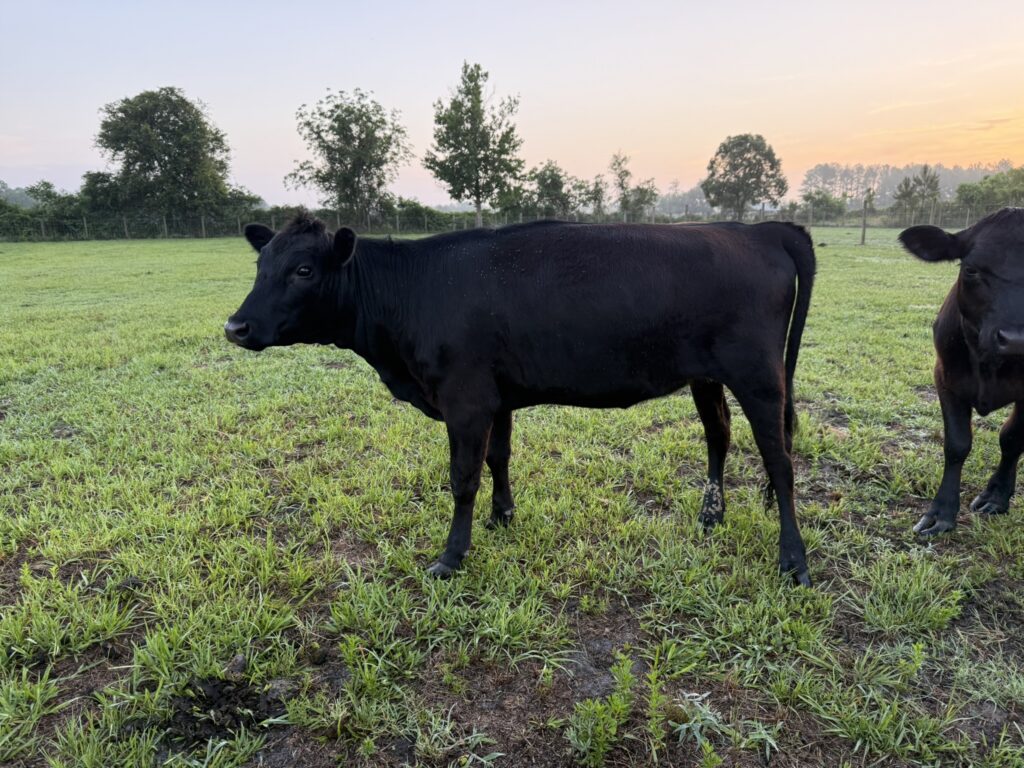
Lola is our youngest heifer and one of the oldest to the farm. We purchased her and Caroline in April of 2025. They both have filled out very well on pasture and some protein. I really like her overall frame and stature (also does not like to have her picture taken). Lola is an American Aberdeen but we do not have papers on her so unfortunately her calves will be 50% moderators as well. She will be bred late this fall for an early fall 2027 calving.
Horses
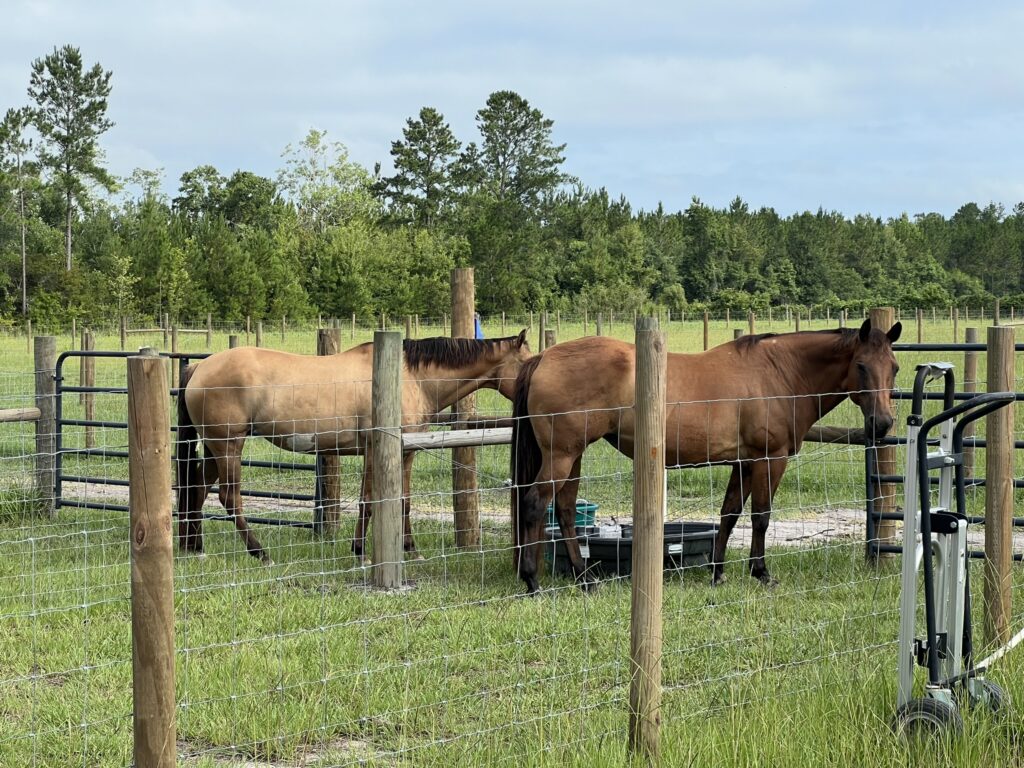
Coco and Daisy
- Their role on the ranch is quite honestly “pasture art” at the moment. Both are still ridable, but work around here gives us very little time to saddle and ride.
- Coco (the bay Quarter Horse mare) is definitely the “herd mare” and pasture boss! She is definitely sassy and makes sure everyone stays in line.
- Daisy (the Paint Mare) is very quiet and docile, she is happy to just be apart of the herd. For anyone who hasn’t ever been around horses, they all say she breaks the ice well.
Donkey
Meet Snowball
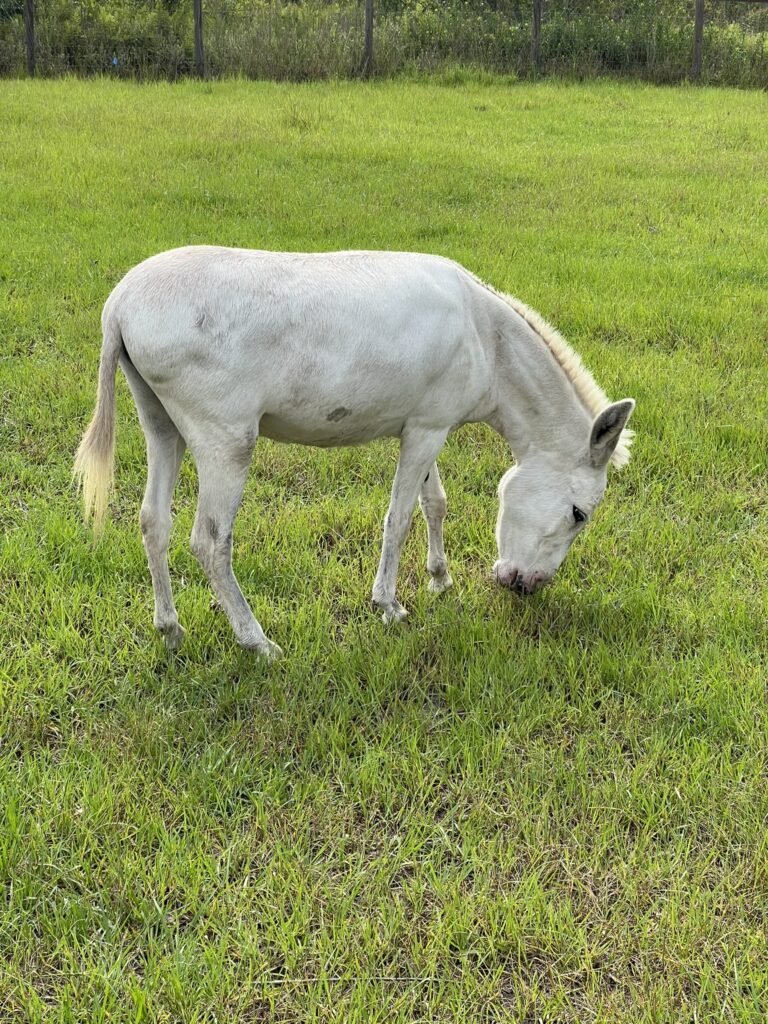
Snowball is “that one at the party that no one forgets”, no one told her she was a mini, she has the personality of a Belgium or Clydesdale and the minute she sees people they hear her in South Carolina. There are days where I can’t tell if she is the glue that keeps the group together or the catalyst to the chaos…
Poultry
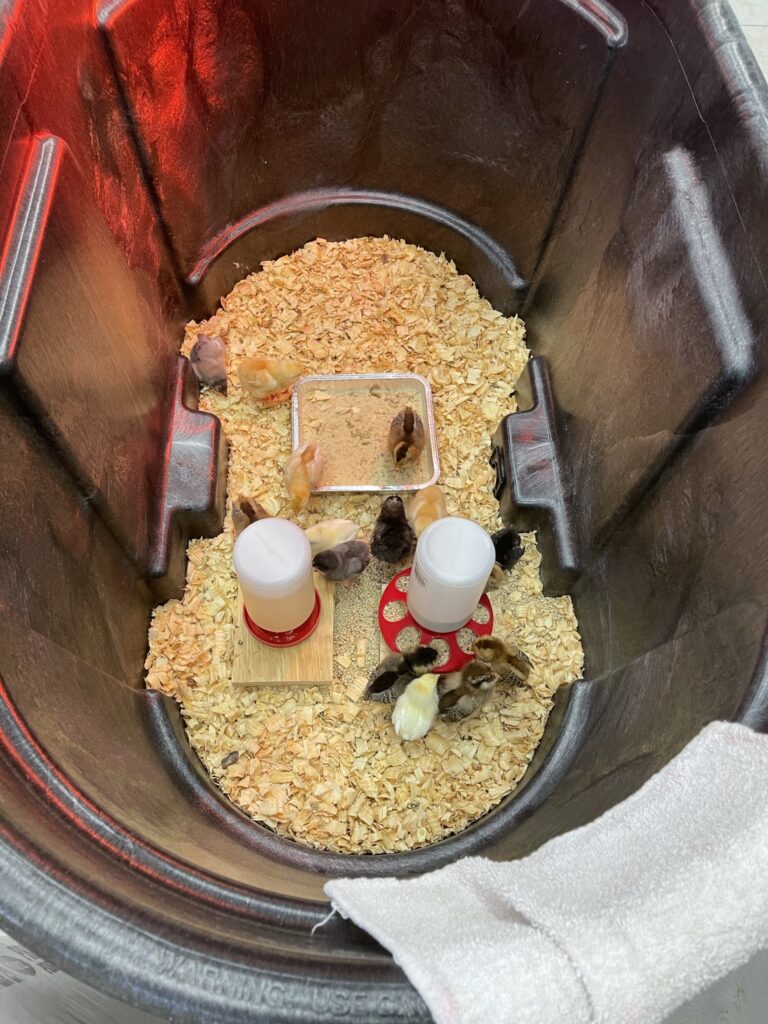
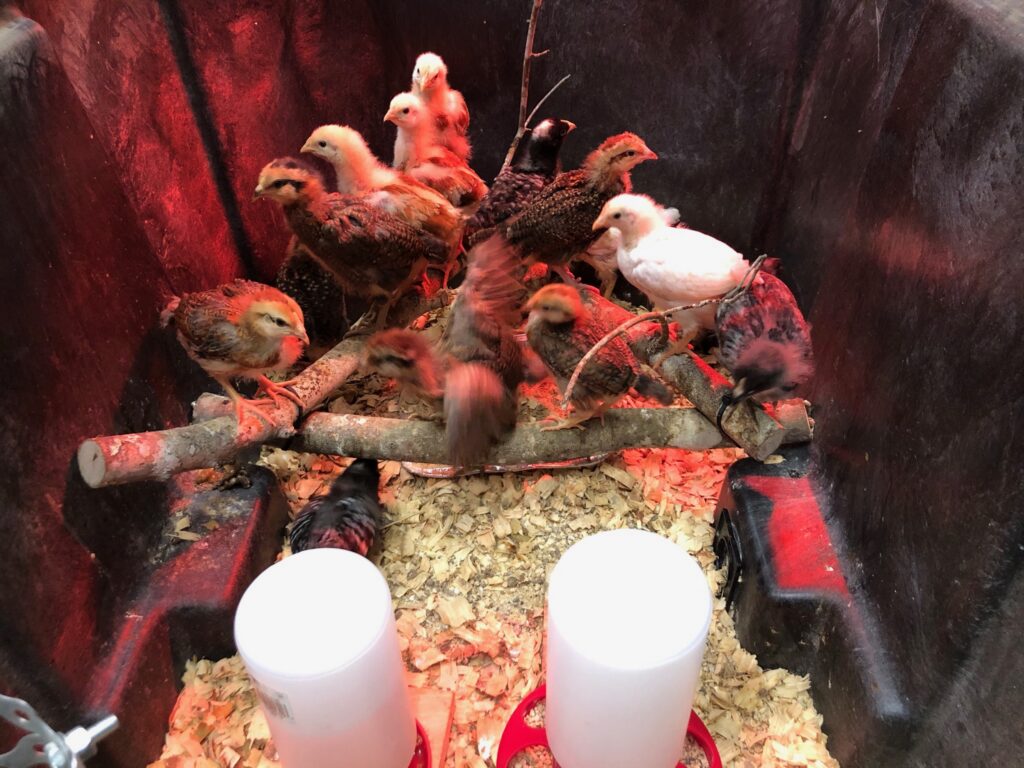
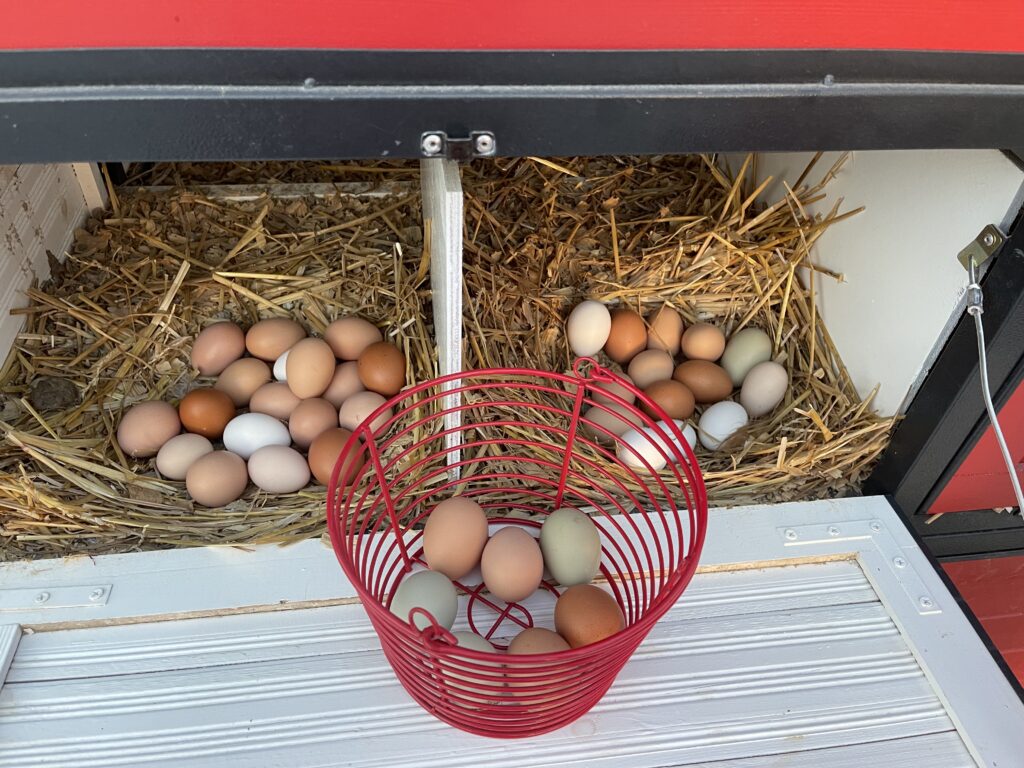
Topics:
- Layers
- Fertile eggs
- Future breeding plans
Eventually:
- Chicks available
- Hatching program
Livestock Guardian Dog
Meet Athena
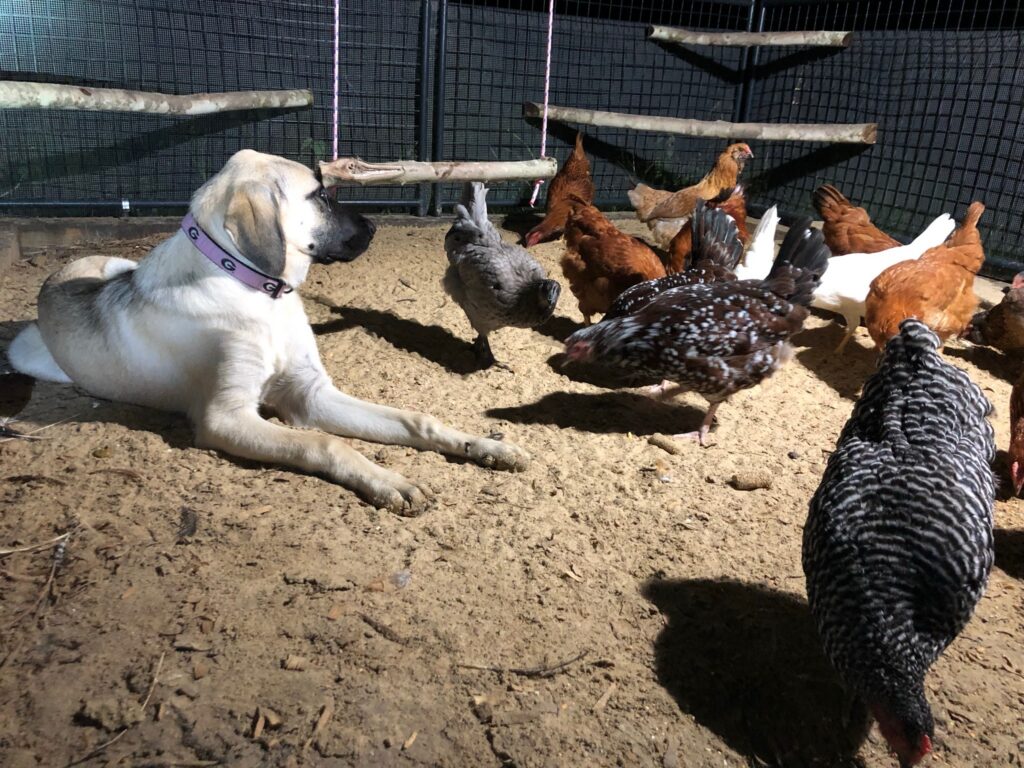
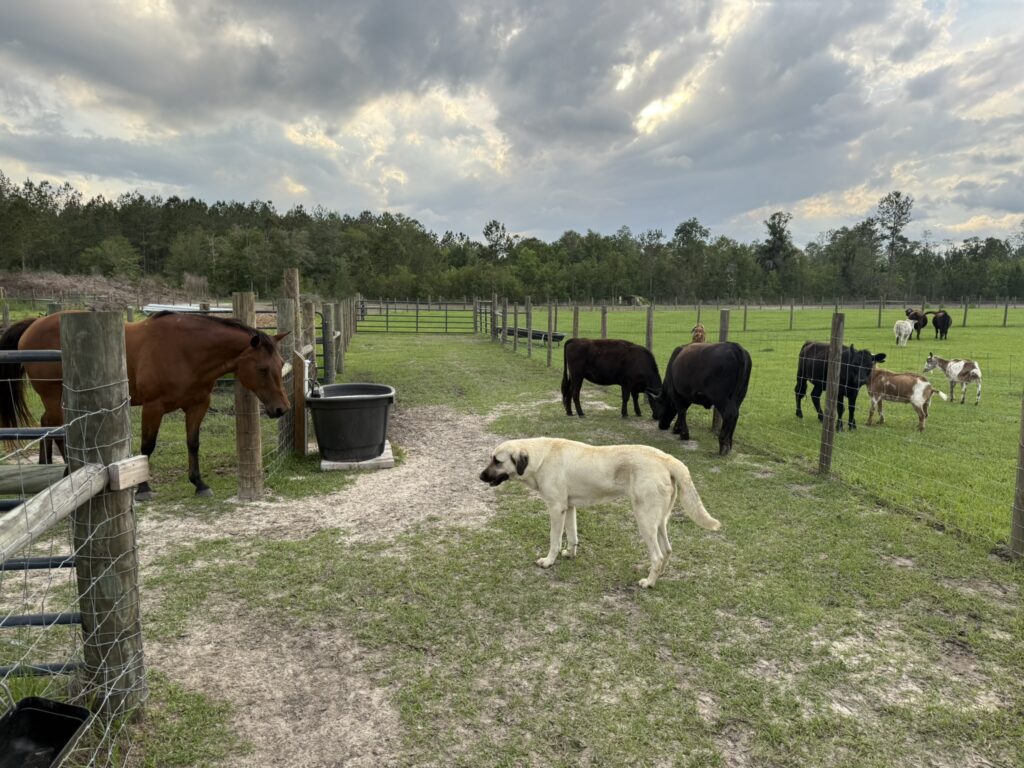
Athena came to us at four months old in a “semi” rescue situation. If you aren’t familiar with Anatolian Shepherds they draw a lot of attention and often garner a level of caution due to their size and reaction to things that are not “normal”.
As an LGD goes, they know their job well and don’t require a lot of training (they honestly wouldn’t listen anyway). But this is where people tend to get off the rails with them. Instinct is something they have a ton of naturally, but they do need guidance and that is where the challenge starts with them. To much and you hurt their instinct, not enough and they can cause a significant heartbreak.
I am going on 10+ years of being around these kids and will tell you I cannot imagine ever not having one or two. But they are not for everyone and owning one is not for the faint of heart. They will test your patience when they are young and yet be your most valuable ally and asset in a rural homestead at maturity.
She knows her job and does it very well, she is fully bonded with our animals and sees things that still amaze me to this day. I think she is part mongoose, has no issue removing any threat to the animals or property with extreme prejudice.
We have a relatively high predator load in our area and would always prefer to have them be warned to stay away as opposed to confrontation but she is well equipped to handle the task.
Husbandry Practices
Animal Care Philosophy
- We purchase all of our animal feed from Resaca Sun. I cannot say enough about they products and will post a blog later outlining our results from the first set of hogs we finished on their product.
- Pasture management
- It does start with the soil, this property was converted pine tree land and now is thriving pastures. Soil tests, lime, land prep, seeding, fertilization and rotation have been very successful for us here.
- Low-stress handling
Future Herd Development
Describe:
- Retaining heifers
- Expanding the Aberdeen program
- AI genetics
- Long-term goals
Available Animals
We are currently focused on building our foundation herd and may not always have animals available. When available, breeding stock and livestock offered for sale will be listed here.